


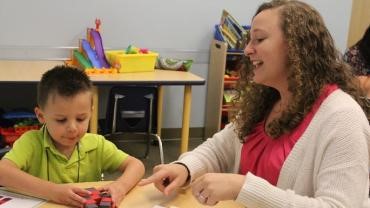
ABA therapy, which stands for Applied Behavior Analysis, is a type of therapy based on the science of learning and behavior, primarily used to help individuals with autism spectrum disorder (ASD) learn new skills, increase positive behaviors, and decrease problematic behaviors by utilizing positive reinforcement techniques; essentially, it aims to improve communication, social skills, and daily living abilities through structured interventions and rewards for desired actions.
Common techniques used in ABA therapy:
- Discrete trial training (DTT): Breaking down skills into small steps and teaching them one at a time with immediate feedback
- Naturalistic teaching: Integrating learning into everyday activities and environments
- Picture exchange communication system (PECS): Using pictures to help individuals communicate their needs
- Token economy: Earning tokens for desired behaviors which can be exchanged for rewards
- Modeling: Demonstrating desired behaviors for the individual to imitate
- How behavior works
- How behavior is affected by the environment
- How learning takes place
- Increase language and communication skills
- Improve attention, focus, social skills, memory, and academics
- Decrease problem behaviors
Positive reinforcement
- Positive reinforcement is one of the main strategies used in ABA.
- When a behavior is followed by something that is valued (a reward), a person is more likely to repeat that behavior. Over time, this encourages positive behavior change.
- First, the therapist identifies a goal behavior. Each time the person uses the behavior or skill successfully, they get a reward. The reward is meaningful to the individual – examples include praise, a toy or book, watching a video, access to playground or other location, and more.
- Positive rewards encourage the person to continue using the skill. Over time this leads to meaningful behavior change.
- Communication and language
- Social skills
- Self-care (such as showering and toileting)
- Play and leisure
- Motor skills
- Learning and academic skills
Comments are closed