


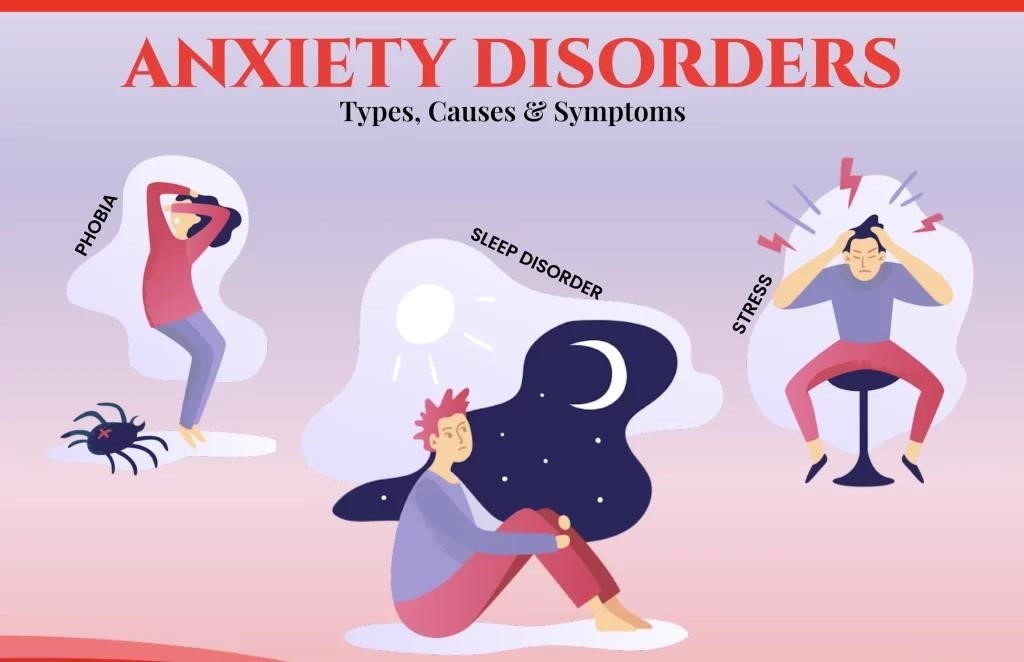
Anxiety disorders are a group of mental disorders characterized by significant and uncontrollable feelings of anxiety and fear such that a person’s social, occupational, and personal functions are significantly impaired.
Symptoms: Worrying, fast heart rate, shakiness
Medication: SSRIs and SNRIs are first line, other options include: tricyclic antidepressants, benzodiazepines, beta blockers
Treatment: Lifestyle changes, counselling, medications
Causes: Genetic, environmental, and psychological factors
Diagnostic method: Psychological assessment
Differential diagnosis: Hyperthyroidism, heart disease, caffeine, alcohol, cannabis use, withdrawal from certain drugs
Duration: Over 6 months
What is the anxiety disorder?
People with an anxiety disorder may experience excessive fear or worry about a specific situation (for example, a panic attack or social situation) or, in the case of generalized anxiety disorder, about a broad range of everyday situations.
What causes anxiety?
These social and environmental factors can include childhood trauma, social isolation, negative life events, stress relating to work or education, physical or mental health problems, and social and societal pressures. Gender can also play a part. Women are almost twice as likely to experience anxiety as men.
What causes stress?
What is stress? Stress is our body’s response to pressure. Many different situations or life events can cause stress. It is often triggered when we experience something new or unexpected that threatens our sense of self or when we feel we have little control over a situation.
What hormone causes anxiety?
Your body produces stress hormones (cortisol and adrenaline) in response to a threat or fear, (either real or perceived.) These steroid hormones help you cope and prepare for action.
What are Anxiety Disorders?
Anxiety is a normal reaction to stress. Mild levels of anxiety can be beneficial in some situations. It can alert us to dangers and help us prepare and pay attention. Anxiety disorders differ from normal feelings of nervousness or anxiousness and involve excessive fear or anxiety. Anxiety disorders are the most common of mental disorders. They affect nearly 30% of adults at some point in their lives. However, anxiety disorders are treatable with a number of psychotherapeutic treatments. Treatment helps most people lead normal productive lives.
Anxiety refers to anticipation of a future concern and is more associated with muscle tension and avoidance behavior.
Fear is an emotional response to an immediate threat and is more associated with a fight or flight reaction – either staying to fight or leaving to escape danger.
Anxiety disorders can cause people to try to avoid situations that trigger or worsen their symptoms. Job performance, schoolwork and personal relationships can be affected. In general, for a person to be diagnosed with an anxiety disorder, the fear or anxiety must.
Generalized Anxiety Disorder
Generalized anxiety disorder involves persistent and excessive worry that interferes with daily activities. This ongoing worry and tension may be accompanied by physical symptoms, such as restlessness, feeling on edge or easily fatigued, difficulty concentrating, muscle tension or problems sleeping. Often the worries focus on everyday things such as job responsibilities, family health or minor matters such as chores, car repairs, or appointments.
Panic Disorder
The core symptom of panic disorder is recurrent panic attacks, an overwhelming combination of physical and psychological distress. During an attack, several of these symptoms occur in combination:
Phobias, Specific Phobia
A specific phobia is excessive and persistent fear of a specific object, situation or activity that is generally not harmful. Patients know their fear is excessive, but they can’t overcome it. These fears cause such distress that some people go to extreme lengths to avoid what they fear. Examples are public speaking, fear of flying or fear of spiders.
Agoraphobia
Agoraphobia is the fear of being in situations where escape may be difficult or embarrassing, or help might not be available in the event of panic symptoms. The fear is out of proportion to the actual situation and lasts generally six months or more and causes problems in functioning. A person with agoraphobia experiences this fear in two or more of the following situations:
- Using public transportation
- Being in open spaces
- Being in enclosed places
- Standing in line or being in a crowd
- Being outside the home alone
The individual actively avoids the situation, requires a companion or endures with intense fear or anxiety. Untreated agoraphobia can become so serious that a person may be unable to leave the house. A person can only be diagnosed with agoraphobia if the fear is intensely upsetting, or if it significantly interferes with normal daily activities.
Social Anxiety Disorder (previously called social phobia)
A person with social anxiety disorder has significant anxiety and discomfort about being embarrassed, humiliated, rejected or looked down on in social interactions. People with this disorder will try to avoid the situation or endure it with great anxiety. Common examples are extreme fear of public speaking, meeting new people or eating/drinking in public. The fear or anxiety causes problems with daily functioning and lasts at least six months.
Separation Anxiety Disorder
A person with separation anxiety disorder is excessively fearful or anxious about separation from those with whom he or she is attached. The feeling is beyond what is appropriate for the person’s age, persists (at least four weeks in children and six months in adults) and causes problems functioning. A person with separation anxiety disorder may be persistently worried about losing the person closest to him or her, may be reluctant or refuse to go out or sleep away from home or without that person, or may experience nightmares about separation. Physical symptoms of distress often develop in childhood, but symptoms can carry though adulthood.
Selective Mutism
Children with selective mutism do not speak in some social situations where they are expected to speak, such as school, even though they speak in other situations. They will speak in their home around immediate family members, but often will not speak even in front of others, such as close friends or grandparents.
The lack of speech may interfere with social communication, although children with this disorder sometimes use non-spoken or nonverbal means (e.g., grunting, pointing, writing). The lack of speech can also have significant consequences in school, leading to academic problems and social isolation. Many children with selective mutism also experience excessive shyness, fear of social embarrassment and high social anxiety. However, they typically have normal language skills.
Selective mutism usually begins before age 5, but it may not be formally identified until the child enters school. Many children will outgrow selective mutism. For children who also have social anxiety disorder, selective mutism may disappear, but symptoms of social anxiety disorder may remain.
Anxiety in the brain is thought to be caused by a combination of factors,
including:
- Brain chemistry:
Imbalances in neurotransmitters and hormones like serotonin, dopamine, and norepinephrine can
contribute to anxiety. - Brain changes :
The limbic system, which controls emotions, may be hyperactive in people with anxiety. The
amygdala, which manages fear, may be especially active in response to anxiety cues. - Genetics :
Anxiety disorders can run in families, suggesting that genetics may play a role. - Environmental factors :
Stressful events, like childhood trauma, the death of a loved one, or violence, can trigger anxiety.
Recovery is possible with treatment
Recovery from an anxiety disorder is possible with the right treatment and support. Effective treatments for anxiety disorders may include:
- Cognitive behavioral therapy – aims to change patterns of thinking, beliefs and behaviors that may trigger anxiety.
- Exposure therapy – involves gradually exposing a person to situations that trigger anxiety using a fear hierarchy: this is called systematic desensitization.
- Anxiety management and relaxation techniques – for example deep muscle relaxation, meditation, breathing exercises and counselling.
- Medication – this may include antidepressants and benzodiazepines.
“Environmental factors: Severe or long-lasting stress can change the
balance of neurotransmitters that control your mood. Experiencing a lot of
stress over a long period can contribute to an anxiety disorder. Experiencing
a traumatic event can also trigger anxiety disorders.”

Comments are closed