


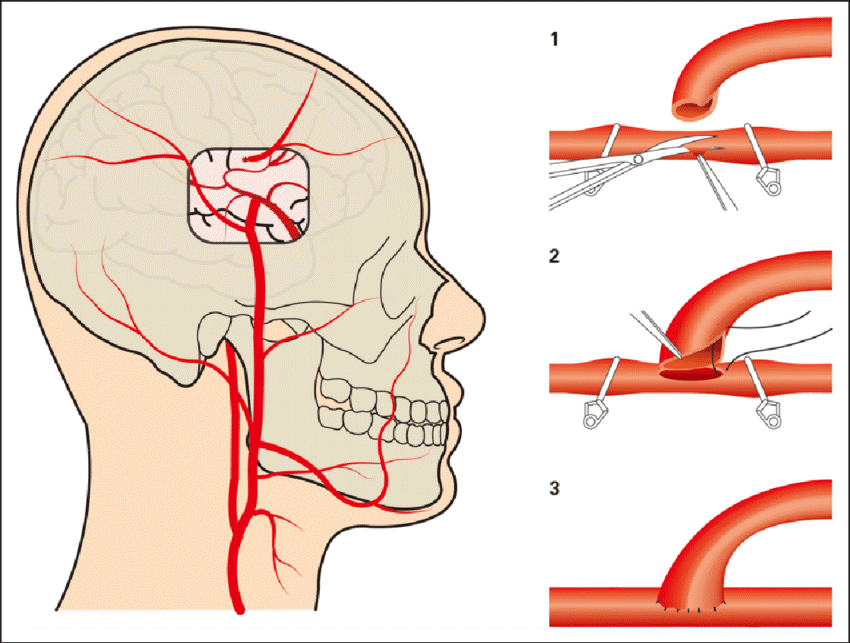
EC-IC (extracranial-intracranial) bypass surgery is a neurosurgical procedure that creates a new pathway for blood to flow into the brain by connecting a branch of the external carotid artery in the neck to a blood vessel inside the skull, bypassing a blockage in an internal carotid artery. The surgery is indicated for specific conditions like Moyamoya disease, certain complex aneurysms, and severe intracranial stenosis that causes focal neurological symptoms. While beneficial for improving brain blood flow and reducing stroke risk, it is a complex surgery with risks including stroke, bleeding, and infection.
What is it?
It’s a type of cerebral revascularization surgery to increase blood flow to the brain.
The procedure involves connecting a superficial artery in the neck (external carotid artery) to a deeper artery inside the brain (internal carotid artery) or one of its branches.
A blood vessel graft, often from your leg, may be used to bridge the two arteries.
When is it performed?
EC-IC bypass is performed for a select group of patients with severe cerebrovascular conditions, including:
Moyamoya disease: A rare disorder causing progressive narrowing of the arteries at the base of the brain.
Intracranial stenosis: Severe narrowing or blockage of an artery inside the skull.
Complex aneurysms: Large, complex, or unclippable aneurysms.
Skull base tumors: When a tumor encases a major intracranial artery.
Risks and Complications
Like any major surgery, EC-IC bypass carries potential risks, including: stroke, bleeding, infection, and seizures.
Benefits
The primary benefits of EC-IC bypass surgery are:
Improved blood flow to the brain .
Reduced risk of future strokes .
Improved quality of life: for some patients.
Considerations
Individual assessment:
The decision to undergo EC-IC bypass is made on an individual basis after a thorough evaluation by medical professionals.
Other treatments:
Other treatments, such as medications or angioplasty, may be recommended or used before considering bypass surgery.
Recovery:
Recovery after the surgery, which involves a craniotomy, can take several weeks to months.
What is the success rate of EC-IC bypass surgery?
Furthermore, EC-IC bypass has been demonstrated to be a relatively safe procedure, with acceptable morbidity and mortality rates. 8, 14, 19, 34 Our data demonstrate that EC-IC bypass is a safe and effective treatment for GIAAs, with acceptable rates of morbidity (5.6%), mortality (5.6%), and graft patency (89.2%).
https://www.sciencedirect.com
Extracranial-intracranial bypass: Resurrection of a nearly extinct …
What is EC surgery?
EC-IC Bypass Surgery, short for extracranial-intracranial bypass surgery, is a procedure used to treat aneurysms, stroke symptoms, and moyamoya disease. When an artery inside the brain is blocked or damaged, EC-IC bypass surgery connects blood vessels to bypass the original artery and restore blood flow to the brain.
All resource supply by Aradhya Clinic and Neuro Research Center (ACNRC)
Comments are closed