


Help your child with cleft lip or cleft palate communicate
What is a Cleft Lip?
A cleft lip is a birth defect that occurs when the tissue that makes up the lips doesn’t fuse
together correctly. This can cause a split in the upper lip, ranging from a small notch to a large opening.
Cleft Lip types
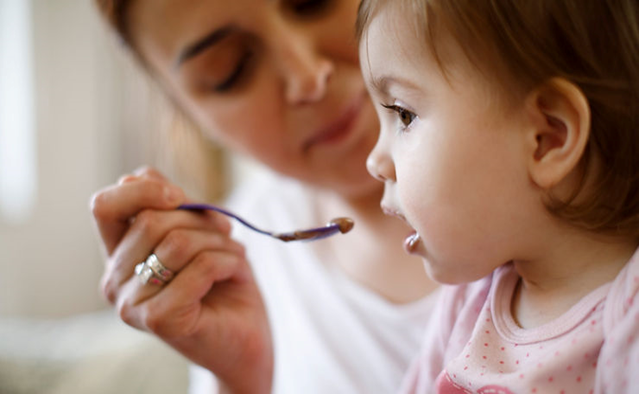 A cleft palate can cause many different symptoms, including:
 Speech therapy can help children with cleft lip and palate in many ways. Here are just a few:
- Unilateral cleft lip- This type of cleft lip affects one side of the upper lip and is the most common type of cleft.
- Bilateral cleft lip- This type of cleft lip affects both sides of the upper lip. This is less common than unilateral cleft lips.
- Unilateral cleft palate- This is one of the cleft palate types that affects one side of the roof of the mouth. This is the most common type of cleft.
- Bilateral cleft palate- This is one of the cleft palate types that affect both sides of the roof of the mouth. This is less common than unilateral clefts.
- Submucous cleft palate- This is one of the cleft palate types that occurs when there is a small slit in the palate. It is the least common type of cleft palate.
- Articulation
- Resonance
- Feeding
- Social skills
- Fluency
- AAC
- Surgery
- Hypernasality This is when too much air escapes through the nose when speaking. This can make speech sound nasal. For example, the word “dog” may sound like “dong.” This is a result of an opening in the palate that affects the velopharyngeal valve.
- Hypo nasality This is when not enough air escapes through the nose when speaking. This can make speech sound unclear. For example, the word “cat” may sound like “bat.” This is a result of a blockage in the nose that affects the velopharyngeal valve.
- Cul de sac resonance This is when air gets trapped in the back of the nose, making speech sound echo-y. This is a result of a blockage in the nose that affects the velopharyngeal valve.
- Family history. If someone in your family has a cleft lip and/or palate, you’re more likely to have one as well.
- Smoking during pregnancy. Women who smoke during pregnancy are more likely to have a baby with a cleft lip and/or palate.
- Certain medical conditions. Diabetes or phenylketonuria (PKU) increase the risk of having a child with a cleft lip and/or palate.
- Speech disorders. Children with a cleft lip may have trouble making certain speech sounds correctly, such as “p” or “b.” When the lip has a cleft, inadequate lip closure and strength can make it difficult to produce these sounds.
- Feeding problems: They may also have trouble with feeding and sucking a bottle or breast. This is because the cleft can make it difficult to create suction.
A cleft palate can cause many different symptoms, including:
- Feeding difficulties. Babies may have trouble feeding because they can’t create suction. This can lead to choking and/or pneumonia.
- Hearing problems. Cleft palate can cause hearing problems because it can affect the way sound waves travel through the mouth and nose.
- Speech disorders. Children with cleft palate may have difficulty speaking clearly. This is because their mouths aren’t able to make all the sounds needed for speech. They may also have trouble with articulation (pronouncing words correctly) and fluency (stuttering).
- The best way to treat a cleft lip and/or palate is with surgery. This can be done as early as a few months after birth. In some cases, additional surgeries may be needed to improve the function and appearance of the lips and mouth. Besides to surgery, pediatric speech-language therapy can be very helpful for children with cleft lip and/or palate. Speech-language therapists can help children with these conditions. They will teach them to learn how to speak correctly and fluently. They can also help them with any feeding difficulties they may have. If your child has a cleft lip and/or palate, talk to your doctor about whether speech-language therapy is right for them. With the help of a speech-language therapist, your child can learn how to speak correctly and fluently! They can overcome any challenges they face. Working with a pediatric SLP can also assist your child in being comfortable in speech therapy, as well as make it fun and create an environment that makes your child excited to practice!
Speech therapy can help children with cleft lip and palate in many ways. Here are just a few:
- For articulation, speech therapists can help children with cleft lip and palate. They will help them learn how to make all the sounds needed for speech.
- For resonation, speech therapists can help children learn how to resonate speech sounds. This can be done by using their nose and mouth. With activities such as blow bubbles and straw phonation, children can learn how to produce speech sounds correctly.
- For feeding, speech therapists can help children with feeding difficulties. It might be caused by cleft lip and palate. Children with cleft lip may have problems with lip closure that causes spillage when drinking from a cup. Therapists can help children learn how to correct this by using different cups and straws.
- For social skills, speech therapists can help children with social interaction. This includes skills such as turn-taking and conversation skills.
- For fluency, speech therapists can help children who stutter learn how to speak more fluently. With activities such as slow speech and easy onsets, children can learn to control their speech and reduce stuttering.
- If a child is unable to speak, a speech therapist can help them learn how to use AAC. AAC includes devices and methods that can help children communicate. This includes picture boards, sign language, and speech-generating devices.
- Eat and drink without spilling
- Make speech sounds correctly
- Learn how to make all the speech sounds
- Improve clarity of speech
- Reduce drooling
- Prevent or correct swallowing problems
ACNRC

Comments are closed